Research
Research
Turning spatial data and AI into decision-support that moves real health resources — organized in four connected threads.
Flagship
Malaria Mapping & Supply Optimization
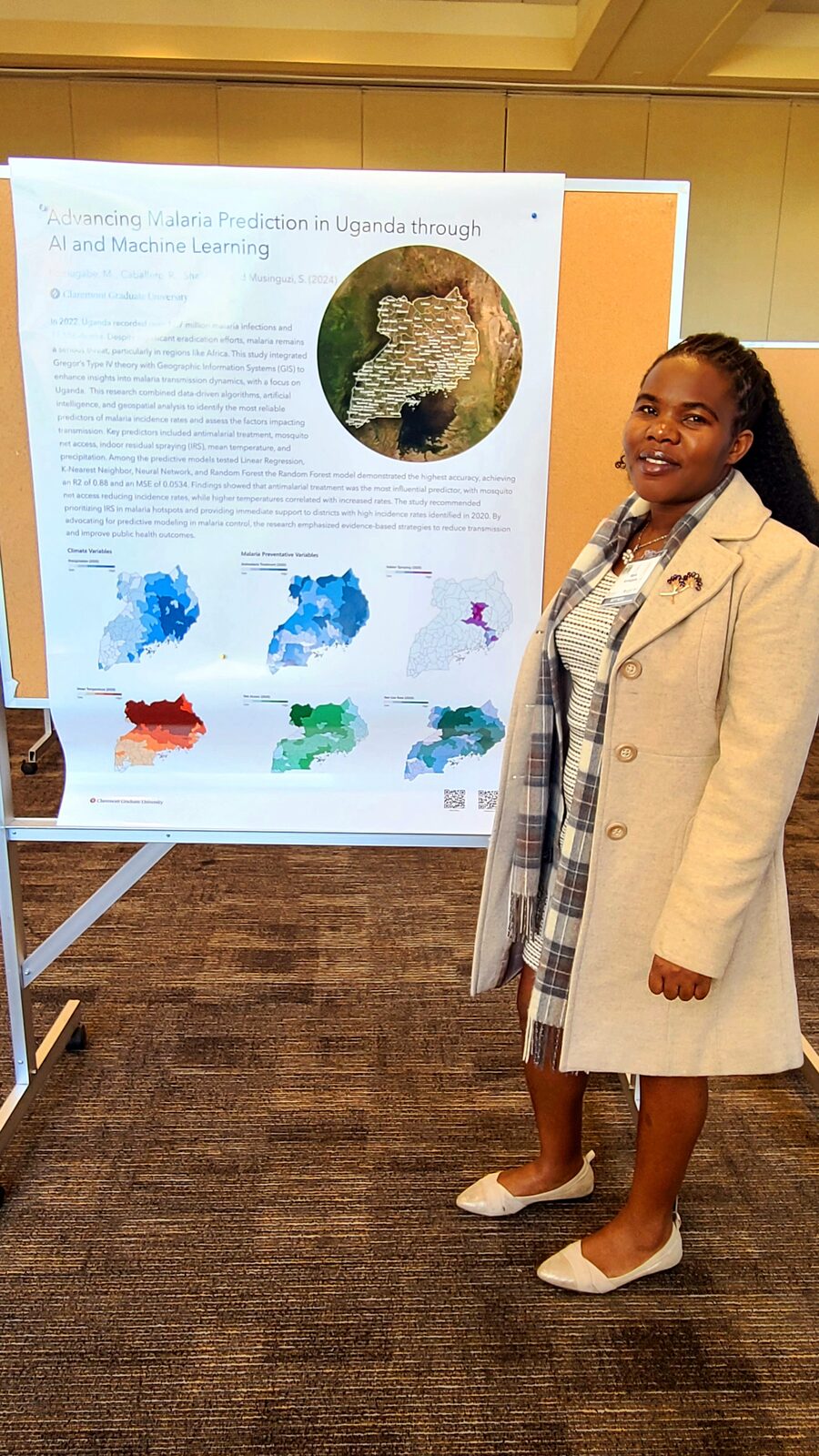
The core of Maria's dissertation: using machine learning and GIS to understand where malaria strikes in Uganda and where the tools to fight it fall short. Comparing Linear Regression, K-Nearest Neighbor, Neural Network, and Random Forest models, Random Forest predicted district-level incidence most reliably — with antimalarial treatment, mosquito-net access, and temperature as the strongest drivers.
A second strand analyzed 260 weekly surveillance reports (2020–2024) and surfaced a "mismatch contradiction": as treatment (ACT) understocking eased, diagnostic-test (RDT) deficits stayed roughly tenfold higher — evidence that manual logistics cannot fix geographic maldistribution, and that AI-guided redistribution could.
Random Forest R² ≈ 0.88 · 260 weeks of surveillance data · 31 districts flagged as chronic-oversupply cold spots
Reserved · Phase 3
A live Malaria Atlas — Uganda dashboard will live here, turning this research into an interactive tool.
Emerging
GeoAI & Geospatial Deep Learning
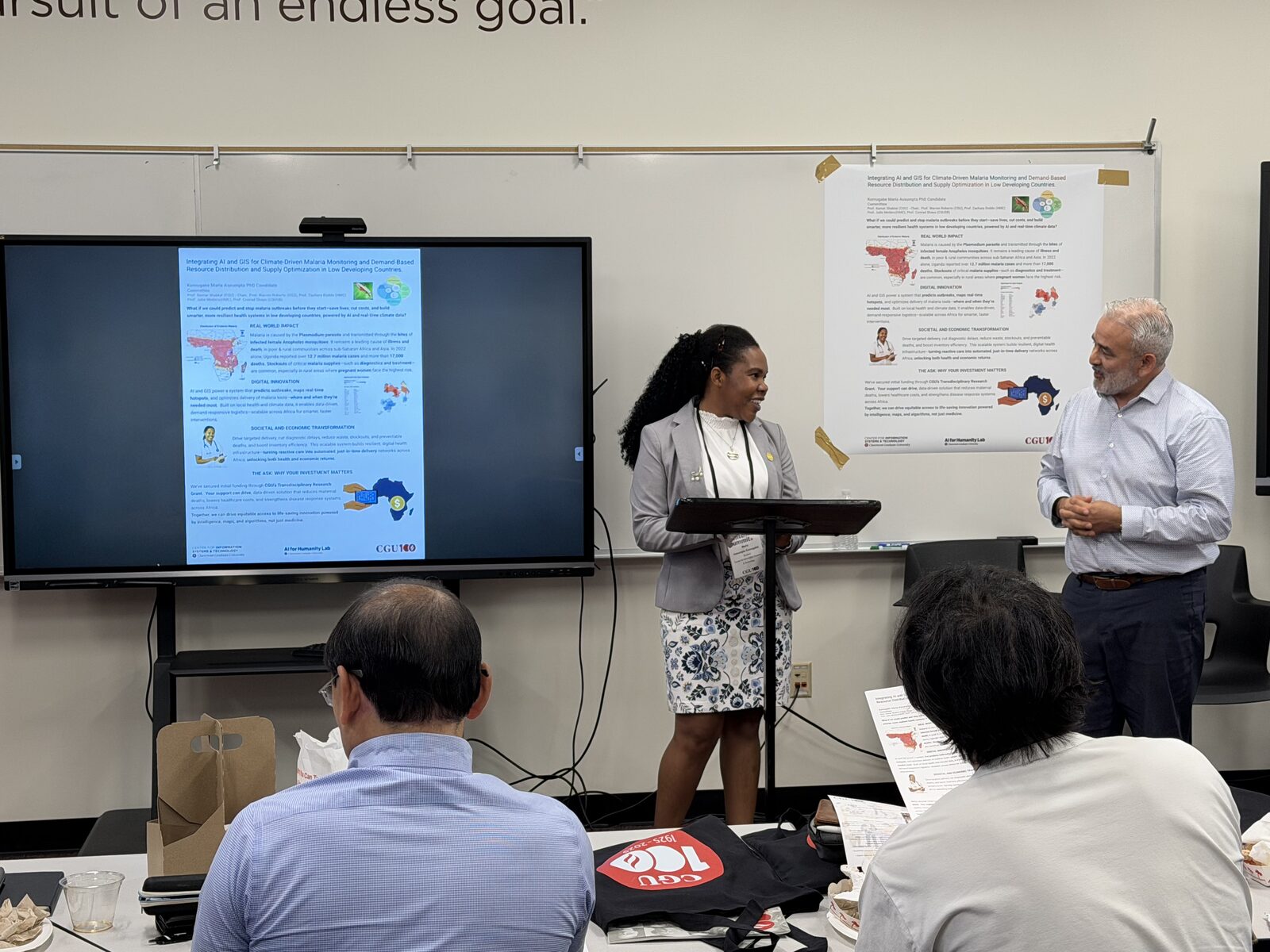
As a Research Fellow at CGU's Center for Information Systems & Technology, Maria develops the next generation of geospatial AI methods — and teaches them. She designed IST 371: GeoAI & Geospatial Deep Learning, a graduate course integrating machine learning, spatial analytics, and geospatial deep learning, and supervises doctoral research on the strategic adoption of generative GeoAI in organizations.
Public health
Maternal & Public-Health Analytics
Beyond malaria, Maria applies spatial and statistical methods to broader health equity questions. A DESRIST 2025 chapter designed a geospatial tool for examining low-birth-weight disparities across California, weighing income, healthcare access, and education. A related study modeled the stress and demographic factors predicting mental-health challenges among postgraduate students at Makerere University.
Low-birth-weight geospatial tools → · Postgraduate mental health →
Education
Computing Education & the Uganda Partnership
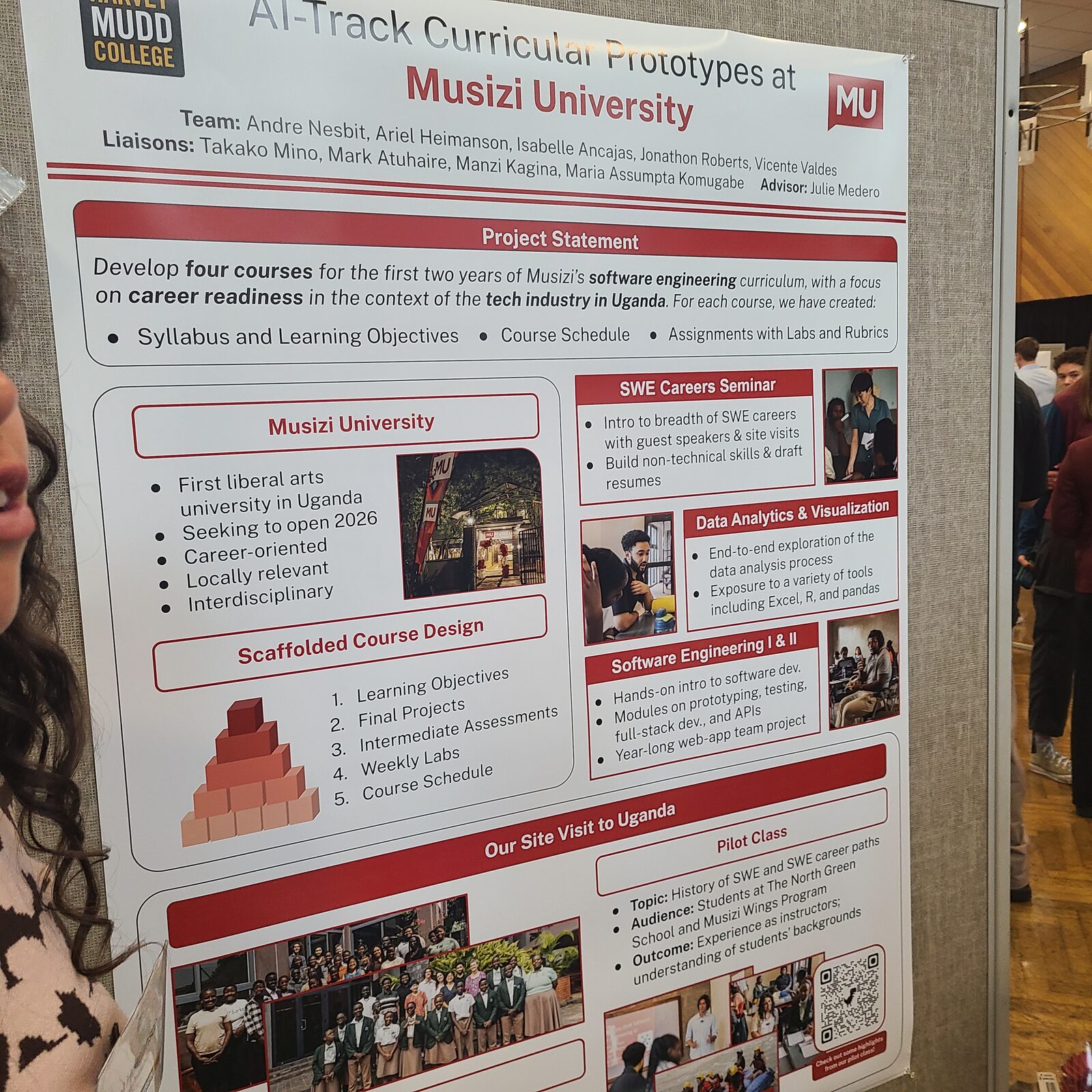
Since 2023, Maria has been curriculum consultant and institutional liaison for the Harvey Mudd College Clinic–Musizi University partnership, mentoring three student teams as they build computing and software-engineering curricula for Uganda's first private liberal arts university — aligning course content with the National Council for Higher Education's standards and Ugandan workforce needs. She contributed materials for 11 general-education and upper-level computing courses and co-authored an experience report for the 2026 Capstone Design Conference.
Mentorship
Supervised Research
Across three degree levels and two universities, Maria has supervised student research spanning health information systems, GeoAI, and computing education.
Doctoral — Claremont Graduate University
- Raynah Wanjiku Kamau-Logan (Ph.D. candidate · 2026) — Strategic Adoption of Generative GeoAI at Esri: A Multi-Tier Approach
Master's — University of Kisubi, Uganda
- Kimbugwe Josiah (2021) — A real-time web-based prisoners' information access system in Uganda — Luzira Maximum Security Prison
- Ssamula Dennis (2021) — A real-time web-based boda-boda tracking system — selected police stations, Kajjansi Town Council
- Akulu Stella (2022) — Integrating ICT in the teaching and learning of economics in selected secondary schools, Gulu City, Uganda
Undergraduate — University of Kisubi, Uganda
- Tumwesigye Hillary (2026) — A maternal-health tracking app for ANC–PNC monitoring
- Damulira Levison (2021) — A web-based car rental system — Kwewaayo Car Rental Services, Uganda
- Kulume Mary (2021) — Clinic management system
- Mwambala Rogers (2021) — School information system — Kitala Secondary School
- Nanyonjo Caroline (2021) — Teachers' motivation and students' academic performance in economics — Katabi, Wakiso District
Maria has also advised three Harvey Mudd College Clinic teams developing computing curricula for Musizi University (2023–2026) — described in the Computing Education thread above.